The hug worth travelling across the world for
For Dunedin’s Mary McFarlane, a life-long teacher, helping young people has been a constant throughout her life, whether they live down the road or on the other side of the world.
The 90-year-old spent more than 40 years as a primary school teacher, including 24 years teaching Year One at St Clair School. Nearly three decades after officially retiring, she can still be found in local schools, helping students as a reader-writer for exams, assessments and NCEA.
But Mary’s commitment to young people extends well beyond the classroom. She is New Zealand’s oldest swimming official and has spent a lifetime beside the pool officiating everywhere from local Dunedin meets to Oceania Championships. She even has a local competition bearing her name – the Mary McFarlane Classic.
And she’s shown little interest in slowing down. Earlier this year, despite recovering from a fall that left her with a broken arm and a new titanium shoulder, she travelled from Dunedin to Uganda to meet seven-year-old Molly, a little girl she sponsors through World Vision who has become a special part of her life.
Mary began sponsoring children 37 years ago, after one of her daughters encouraged her and her late husband Paddy to give it a go. The first child they sponsored is now in his 40s and married with six children of his own.
Since then, Mary has visited Africa five times, including four trips to meet the children she sponsors. Her latest journey took her to Molly’s community in Uganda, a three-and-a-half-hour drive along roads she won’t soon forget.
“I will never complain about the roads in Dunedin again!” she laughs, remembering the potholes.
When she arrived, around 20 or 30 children were patiently lining up for maize porridge, which for many would be their first meal of the day and, for some, possibly their only meal of the day. Their patience immediately struck the former teacher.
“No pushing, no shoving. Their manners were impeccable,” Mary says. “They were such lovely children.”
Mary rolled up her sleeves and helped to serve the porridge before meeting Molly, who walks around three kilometres to school each day.
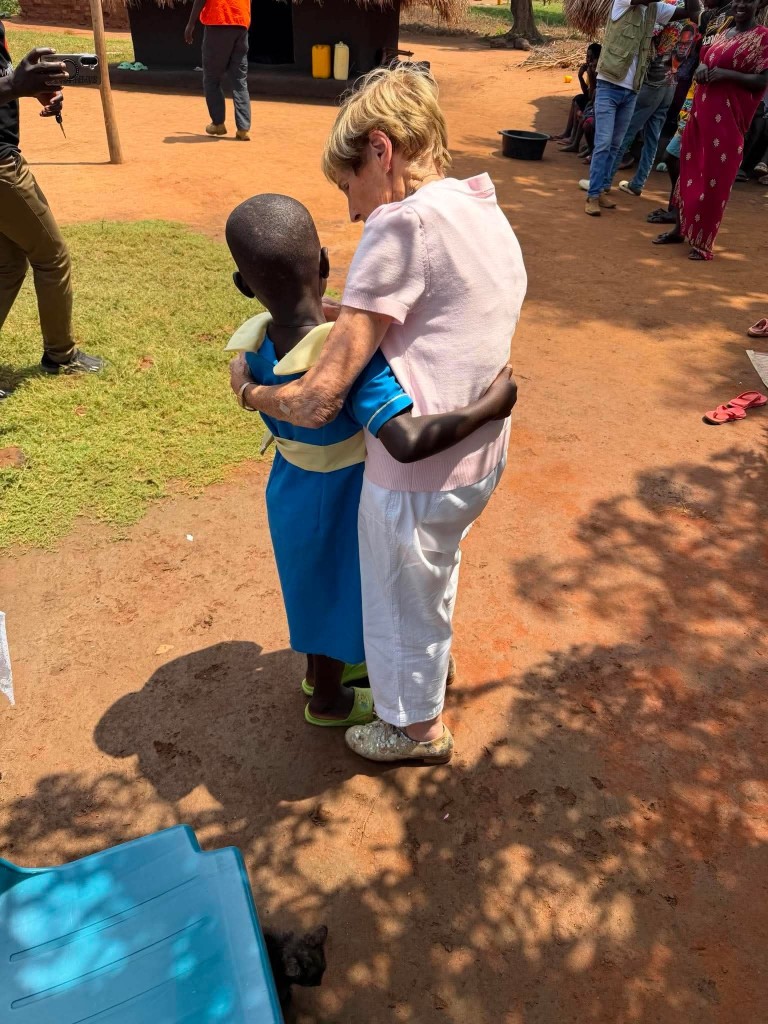
When the pair sat together, Molly greeted Mary with a big hug, something she still recalls fondly.
While Mary saw new classrooms, desks and learning resources, she was struck by how crowded some of the classes were, with up to 50 pupils and lessons running in shifts due to a lack of space.
“The teachers labour under extreme difficulty,” she says. “But the children were so eager to learn.”
For a woman who has devoted so much of her life to education, the visit reinforced something Mary has long believed: “An education is the most important gift a child can receive. It opens up opportunities.”
To help further Molly’s education, Mary had brought the wee girl a simple gift: a box of six pencils, an everyday addition to a pencil case for most New Zealand children, but something Molly treasured.
When she opened the box, her face lit up.
“She was so excited,” says Mary. “You’d have thought I’d given her gold.”
One of the most touching moments came when Molly’s grandmother gently reached out and patted Mary’s face. Although the two women shared no common language, the warmth between them needed no words.
“I gave her a hug,” Mary says. “It was so nice. They were such a lovely family.”
Wanting to bring something useful for Molly’s family, Mary asked what they needed most before her visit. When she learned they were sleeping on a flax mat on the ground, she provided a mattress and sheets, along with everyday essentials including soap, toothpaste, toothbrushes and groceries.
She also gave a livelier gift: a pregnant goat, which the family named Mary in honour of their visitor. “It was wonderful seeing how grateful they were,” Mary says. “The look on their faces was amazing.”
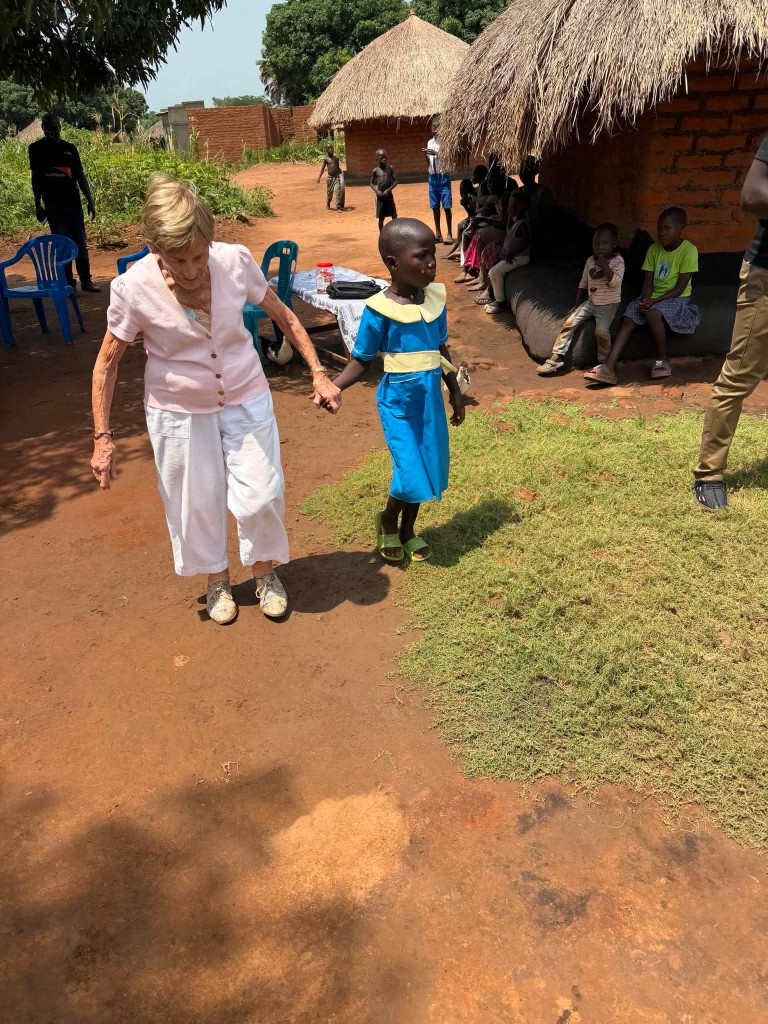
During her visit, Molly proudly showed Mary around her home, including the basin of water the family uses for washing. Outside, the garden was dry and struggling after a lack of rain. Together, Mary and Molly planted a jackfruit tree, Molly’s favourite.
“I’d love to go back in five years and see how tall it’s grown,” Mary laughs. “If I’m still around!”
Seeing firsthand the challenges children and families face has only strengthened Mary’s commitment to child sponsorship.
“People say, ‘Why do you do it when there are people in need in New Zealand?’” she says.
For Mary, the answer is simple: children in Uganda experience much greater hardship than most children in New Zealand. “You should go to Africa and have a look and see.”
Yet despite the challenges she witnessed, what Mary remembers most is the joy.
“The children were so happy even though they have so little.”
Mary returned to Dunedin with treasured memories of Molly, her family and the community that welcomed her so warmly.
And back in Uganda, a little jackfruit tree is now growing alongside the seven-year-old girl who planted it with Mary.
“I’d love to go again,” Mary says. “We’ll see.”
To sponsor a child, visit worldvision.org.nz
The 90-year-old spent more than 40 years as a primary school teacher, including 24 years teaching Year One at St Clair School. Nearly three decades after officially retiring, she can still be found in local schools, helping students as a reader-writer for exams, assessments and NCEA.
But Mary’s commitment to young people extends well beyond the classroom. She is New Zealand’s oldest swimming official and has spent a lifetime beside the pool officiating everywhere from local Dunedin meets to Oceania Championships. She even has a local competition bearing her name – the Mary McFarlane Classic.
And she’s shown little interest in slowing down. Earlier this year, despite recovering from a fall that left her with a broken arm and a new titanium shoulder, she travelled from Dunedin to Uganda to meet seven-year-old Molly, a little girl she sponsors through World Vision who has become a special part of her life.
Mary began sponsoring children 37 years ago, after one of her daughters encouraged her and her late husband Paddy to give it a go. The first child they sponsored is now in his 40s and married with six children of his own.
Since then, Mary has visited Africa five times, including four trips to meet the children she sponsors. Her latest journey took her to Molly’s community in Uganda, a three-and-a-half-hour drive along roads she won’t soon forget.
“I will never complain about the roads in Dunedin again!” she laughs, remembering the potholes.
A teacher goes back to school
After more than four decades in the classroom, there was one place Mary was particularly keen to visit: Molly’s school.When she arrived, around 20 or 30 children were patiently lining up for maize porridge, which for many would be their first meal of the day and, for some, possibly their only meal of the day. Their patience immediately struck the former teacher.
“No pushing, no shoving. Their manners were impeccable,” Mary says. “They were such lovely children.”
Mary rolled up her sleeves and helped to serve the porridge before meeting Molly, who walks around three kilometres to school each day.
When the pair sat together, Molly greeted Mary with a big hug, something she still recalls fondly.
While Mary saw new classrooms, desks and learning resources, she was struck by how crowded some of the classes were, with up to 50 pupils and lessons running in shifts due to a lack of space.
“The teachers labour under extreme difficulty,” she says. “But the children were so eager to learn.”
For a woman who has devoted so much of her life to education, the visit reinforced something Mary has long believed: “An education is the most important gift a child can receive. It opens up opportunities.”
To help further Molly’s education, Mary had brought the wee girl a simple gift: a box of six pencils, an everyday addition to a pencil case for most New Zealand children, but something Molly treasured.
When she opened the box, her face lit up.
“She was so excited,” says Mary. “You’d have thought I’d given her gold.”
Meeting Molly’s family
After visiting the school, Mary was welcomed into Molly’s home, where she met her parents, Christine and Godfrey, her siblings, grandmother and extended family.One of the most touching moments came when Molly’s grandmother gently reached out and patted Mary’s face. Although the two women shared no common language, the warmth between them needed no words.
“I gave her a hug,” Mary says. “It was so nice. They were such a lovely family.”
Wanting to bring something useful for Molly’s family, Mary asked what they needed most before her visit. When she learned they were sleeping on a flax mat on the ground, she provided a mattress and sheets, along with everyday essentials including soap, toothpaste, toothbrushes and groceries.
She also gave a livelier gift: a pregnant goat, which the family named Mary in honour of their visitor. “It was wonderful seeing how grateful they were,” Mary says. “The look on their faces was amazing.”
During her visit, Molly proudly showed Mary around her home, including the basin of water the family uses for washing. Outside, the garden was dry and struggling after a lack of rain. Together, Mary and Molly planted a jackfruit tree, Molly’s favourite.
“I’d love to go back in five years and see how tall it’s grown,” Mary laughs. “If I’m still around!”
Seeing firsthand the challenges children and families face has only strengthened Mary’s commitment to child sponsorship.
“People say, ‘Why do you do it when there are people in need in New Zealand?’” she says.
For Mary, the answer is simple: children in Uganda experience much greater hardship than most children in New Zealand. “You should go to Africa and have a look and see.”
Yet despite the challenges she witnessed, what Mary remembers most is the joy.
“The children were so happy even though they have so little.”
Mary returned to Dunedin with treasured memories of Molly, her family and the community that welcomed her so warmly.
And back in Uganda, a little jackfruit tree is now growing alongside the seven-year-old girl who planted it with Mary.
“I’d love to go again,” Mary says. “We’ll see.”
To sponsor a child, visit worldvision.org.nz