The girl who wanted to bring water to the desert

When Hanna Taylor Moller was 13, she forgot to bring a book to school for silent sustained reading, a seemingly small moment that would become a pivotal turning point for her future destiny.
Looking for something to read, she picked up a copy of National Geographic and was immediately transfixed by an article on The Sahel, the vast, semi-arid strip of land stretching across the top of Africa. She says, “I remember looking at graphic photos that showed people trying to survive without water and thinking this isn’t right. It was in that moment I decided to devote my life to bringing essential water to dry places.”
Raised in a Christian home with a strong sense of social justice, Hanna grew up believing faith meant action. “For me, faith was never just personal belief — it was about serving the vulnerable.” Inspired by an engineer uncle and a master-builder grandfather, she chose engineering as her tool for change.
After completing a Bachelor of Environmental Engineering with first-class honours at the University of Canterbury, she worked to gain practical experience designing water and sanitation systems she hoped to one day use in crisis settings.
A further defining moment for Hanna was the 2001 September 11 attacks in America. She says, “As a Kiwi back then, I didn’t know any Muslims. I didn’t understand Islam. And as a person of faith, I wanted to.” She left her engineering job in New Zealand and moved to northern Pakistan, living with a Muslim family in a remote mountain village to work with the Aga Khan Foundation.
One thing that struck her while in Pakistan was that women were largely unseen in the community. She says, “You simply didn’t see women in public.” One day, when Hanna was installing a well, a little girl took her hand and led her to a basement room filled with women, all dressed in burkhas. “They closed the door, removed their veils, turned on music, and we danced. It was so incredible, joyful, and freeing, and really showed me how much strength and solidarity existed beneath the surface.”
When she returned to New Zealand, she had a strong desire to further understand her own faith and beliefs, so she studied theology, “I truly believe knowledge is power. I needed to wrestle with my faith for myself.”
In 2009, she began her first humanitarian mission with the International Committee of the Red Cross in Darfur, in a small village near the Chad border in Northern Africa.
Living in a remote compound with minimal supplies that arrived fortnightly via a supply plane, she realised just how much abundance we take for granted. She says, ‘Little things like obtaining fresh vegetables were such a luxury. I still remember how excited I was when a single, glad wrapped broccoli was sent to us from colleagues in the capital Khartoum,” she laughs.
The mission gave her the opportunity to put her technical skills to practice building water systems and installing sanitation infrastructure.
One of her first projects involved drilling 400 metres to reach an ancient aquifer. Months were spent negotiating access and painstakingly drilling. “When we finally struck water, it felt like a miracle.” Six hours later, the well was bombed. “We were devastated. Nearly a year’s work gone in an instant.”
That experience highlighted a harsh reality: “Water systems are often targeted in conflict. They get bombed, poisoned, destroyed because everyone knows that without water, people can’t survive.”
Over the past decade, Hanna has responded to crises across some of the world’s most fragile contexts, from conflict zones and disease outbreaks like Ebola and cholera, to natural disasters. She has worked across North and West Africa, Nepal, Haiti, Jordan, Lebanon, Kurdistan, and on the Turkish-Syrian border, witnessing firsthand the impact of war and displacement.
One of the experiences closest to her heart is the time she spent on the Syrian border for just over a year, collaborating with a team of all male Syrian engineers, until a woman later joined as a health volunteer. She says, “I feel emotional just thinking about them. I’ll never forget the day Syria became free. An engineer friend of mine was in Idlib with his family, and I was with my family in New Zealand. As soon as I heard the news I called and our families celebrated Syria’s freedom together over the phone, across thousands of kilometres.”
After years on the ground running programmes inside, and in the countries surrounding Syria, Hanna was exhausted, so she moved to Copenhagen to be near family, taking a role as a senior donor strategist with Save the Children during the height of the Syrian refugee crisis. Working with the European Union, she managed their largest humanitarian programmes globally – a cash programme of 100 million euros supporting 100,000 Syrian families displaced to Lebanon. Many of these families had nothing. She says, “Families were living in garages, sheds, chicken coops, and roadside tents. Lebanon itself was struggling, and tensions were high, yet we were able to provide critical support while helping maintain peace.”
Now back in New Zealand, she reflects on her time in Syria. “I have the incredible privilege of returning home to Zealand, healthy and safe. But my Syrian colleagues continue to face unimaginable challenges. Their homes, land, assets, and even their government collapsed, yet they continue to work, often with little support or protection. They take enormous personal risks, sometimes at huge cost to themselves and their families.”
While working as a humanitarian is incredibly rewarding, and Hanna’s commitment to her work never wavered, the emotional toll it has taken has been significant.
“It’s hard enough reading about suffering on your phone. But when you’re there and you’re responsible for easing it, it can feel unbearable.”
She has seen colleagues kidnapped and communities shattered. “I think trauma lives in your body,” she says quietly. “But my faith gives me a source of hope. I couldn’t continue this work without believing that good will triumph, and that there will be justice and comfort for those who suffer.”
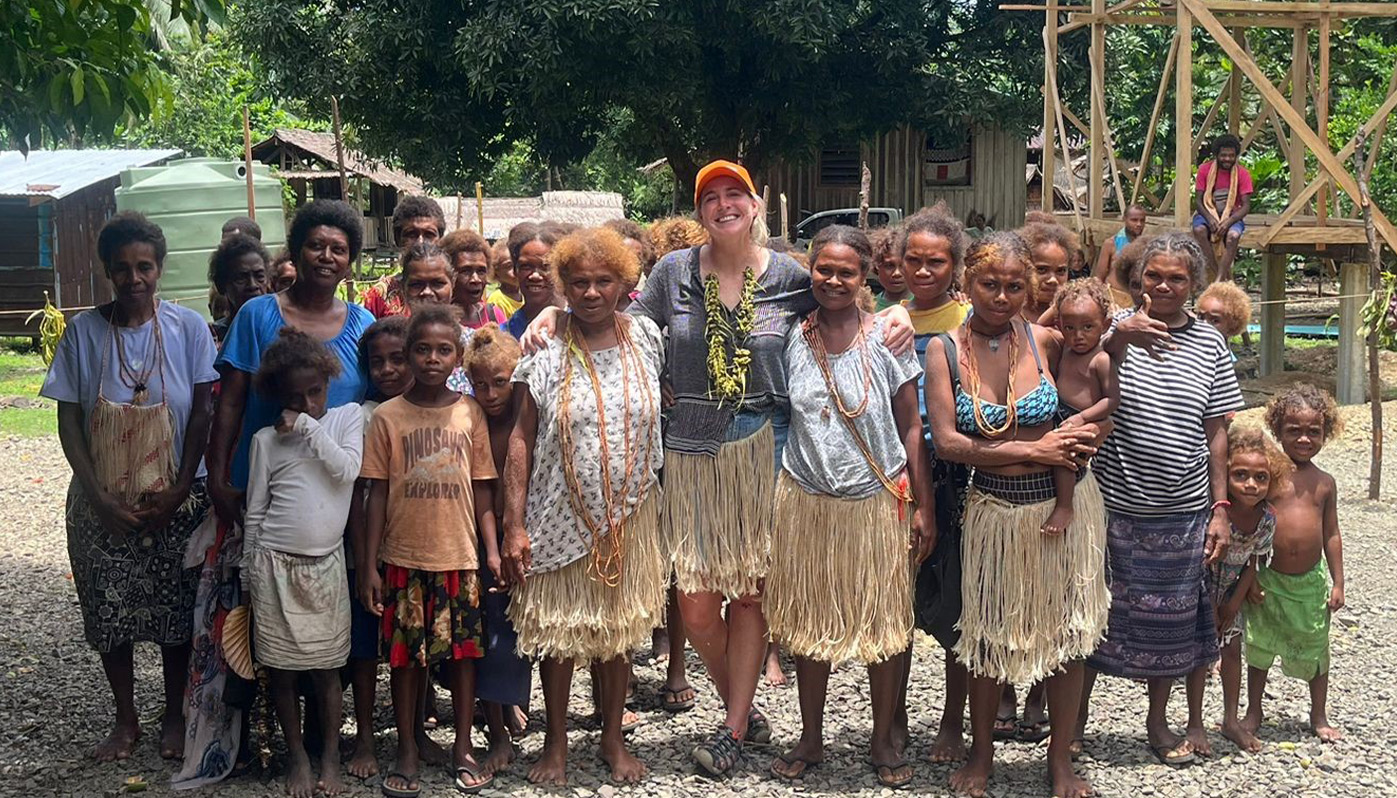
Today, as Head of Pacific Partnerships at World Vision New Zealand, Hanna brings her frontline experience to her leadership role.
Growing up in multicultural Mt Roskill has shaped her love for the Pacific. “After years in deserts, I’m grateful to live near the ocean,” she says. “But my training allows me to recognise the vulnerabilities in this environment too — soil degradation, cyclones, and malnutrition. The beauty doesn’t erase the fragility.”
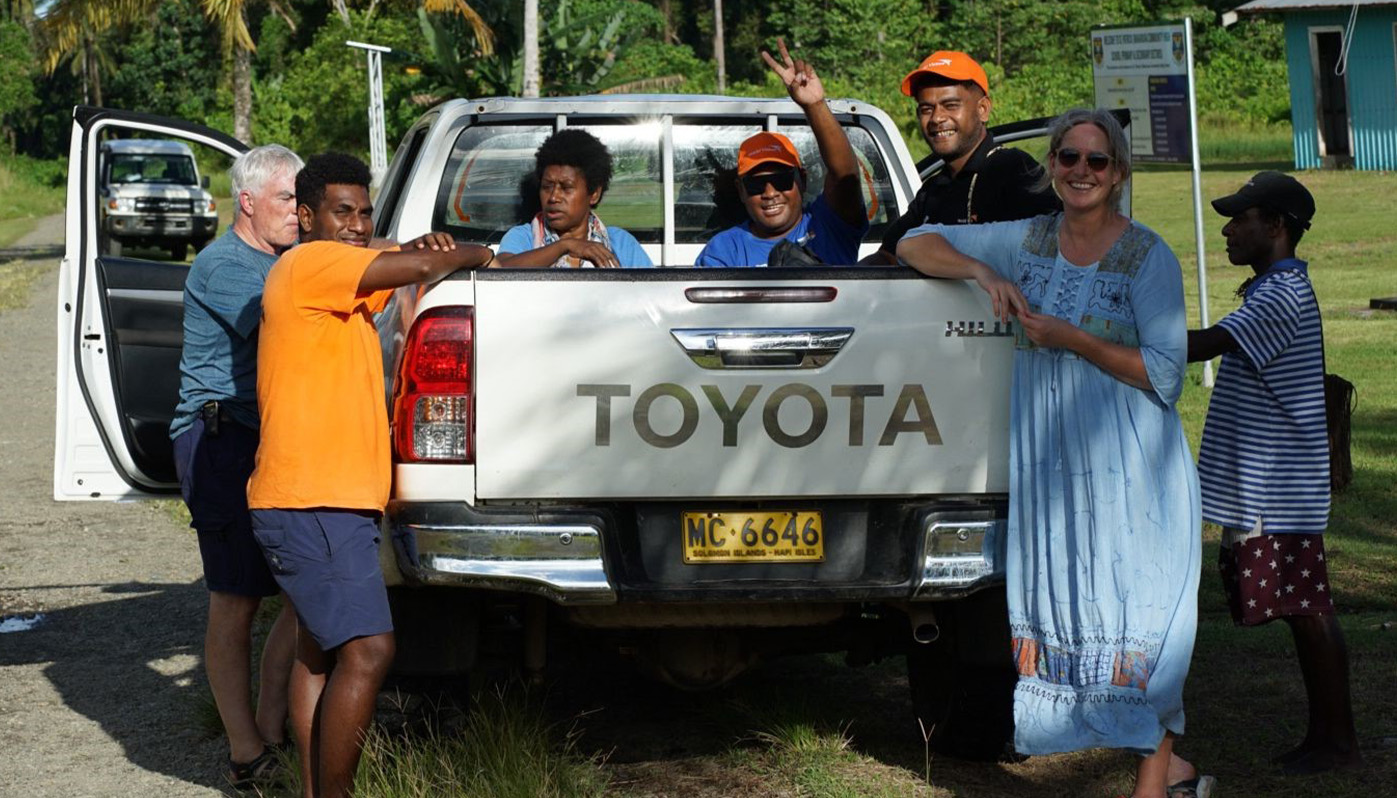
Though she has left field deployments behind, they will always remain with her. “I don’t speak about my former life much because I continue to find it hard to reconcile,” she admits. “But whenever I meet with donors or government officials, I’m thinking about the communities we serve. They’re never far from my mind.”
Today, her most important role, motherhood, has sharpened everything, while deepening her perspective. She says, “I’m incredibly lucky to raise my boys in one of the safest countries in the world. I want them to have strength but also gentleness. Gratitude. Generosity.”
Hanna is also passionate about supporting and empowering women who are often the backbone of communities. She says, ‘When women find their voice and have access to resources, they naturally seek the good of their families and communities. Women uplift their communities.”
Hanna thinks it’s important we take stock of where we are at and what is yet to be done. Looking back at the 13-year-old girl who dreamed of bringing water to deserts, she says, “You can do more and change more than you know. Don’t let anyone tell you otherwise.”
In every dry place she has ever stood, she has carried the same conviction: hope, like water, must keep flowing.
Learn more about how you can help children and families living in the world's most dangerous places.
Looking for something to read, she picked up a copy of National Geographic and was immediately transfixed by an article on The Sahel, the vast, semi-arid strip of land stretching across the top of Africa. She says, “I remember looking at graphic photos that showed people trying to survive without water and thinking this isn’t right. It was in that moment I decided to devote my life to bringing essential water to dry places.”
Raised in a Christian home with a strong sense of social justice, Hanna grew up believing faith meant action. “For me, faith was never just personal belief — it was about serving the vulnerable.” Inspired by an engineer uncle and a master-builder grandfather, she chose engineering as her tool for change.
After completing a Bachelor of Environmental Engineering with first-class honours at the University of Canterbury, she worked to gain practical experience designing water and sanitation systems she hoped to one day use in crisis settings.
A further defining moment for Hanna was the 2001 September 11 attacks in America. She says, “As a Kiwi back then, I didn’t know any Muslims. I didn’t understand Islam. And as a person of faith, I wanted to.” She left her engineering job in New Zealand and moved to northern Pakistan, living with a Muslim family in a remote mountain village to work with the Aga Khan Foundation.
One thing that struck her while in Pakistan was that women were largely unseen in the community. She says, “You simply didn’t see women in public.” One day, when Hanna was installing a well, a little girl took her hand and led her to a basement room filled with women, all dressed in burkhas. “They closed the door, removed their veils, turned on music, and we danced. It was so incredible, joyful, and freeing, and really showed me how much strength and solidarity existed beneath the surface.”
When she returned to New Zealand, she had a strong desire to further understand her own faith and beliefs, so she studied theology, “I truly believe knowledge is power. I needed to wrestle with my faith for myself.”
In 2009, she began her first humanitarian mission with the International Committee of the Red Cross in Darfur, in a small village near the Chad border in Northern Africa.
Living in a remote compound with minimal supplies that arrived fortnightly via a supply plane, she realised just how much abundance we take for granted. She says, ‘Little things like obtaining fresh vegetables were such a luxury. I still remember how excited I was when a single, glad wrapped broccoli was sent to us from colleagues in the capital Khartoum,” she laughs.
The mission gave her the opportunity to put her technical skills to practice building water systems and installing sanitation infrastructure.
One of her first projects involved drilling 400 metres to reach an ancient aquifer. Months were spent negotiating access and painstakingly drilling. “When we finally struck water, it felt like a miracle.” Six hours later, the well was bombed. “We were devastated. Nearly a year’s work gone in an instant.”
That experience highlighted a harsh reality: “Water systems are often targeted in conflict. They get bombed, poisoned, destroyed because everyone knows that without water, people can’t survive.”
Over the past decade, Hanna has responded to crises across some of the world’s most fragile contexts, from conflict zones and disease outbreaks like Ebola and cholera, to natural disasters. She has worked across North and West Africa, Nepal, Haiti, Jordan, Lebanon, Kurdistan, and on the Turkish-Syrian border, witnessing firsthand the impact of war and displacement.
One of the experiences closest to her heart is the time she spent on the Syrian border for just over a year, collaborating with a team of all male Syrian engineers, until a woman later joined as a health volunteer. She says, “I feel emotional just thinking about them. I’ll never forget the day Syria became free. An engineer friend of mine was in Idlib with his family, and I was with my family in New Zealand. As soon as I heard the news I called and our families celebrated Syria’s freedom together over the phone, across thousands of kilometres.”
After years on the ground running programmes inside, and in the countries surrounding Syria, Hanna was exhausted, so she moved to Copenhagen to be near family, taking a role as a senior donor strategist with Save the Children during the height of the Syrian refugee crisis. Working with the European Union, she managed their largest humanitarian programmes globally – a cash programme of 100 million euros supporting 100,000 Syrian families displaced to Lebanon. Many of these families had nothing. She says, “Families were living in garages, sheds, chicken coops, and roadside tents. Lebanon itself was struggling, and tensions were high, yet we were able to provide critical support while helping maintain peace.”
Now back in New Zealand, she reflects on her time in Syria. “I have the incredible privilege of returning home to Zealand, healthy and safe. But my Syrian colleagues continue to face unimaginable challenges. Their homes, land, assets, and even their government collapsed, yet they continue to work, often with little support or protection. They take enormous personal risks, sometimes at huge cost to themselves and their families.”
While working as a humanitarian is incredibly rewarding, and Hanna’s commitment to her work never wavered, the emotional toll it has taken has been significant.
“It’s hard enough reading about suffering on your phone. But when you’re there and you’re responsible for easing it, it can feel unbearable.”
She has seen colleagues kidnapped and communities shattered. “I think trauma lives in your body,” she says quietly. “But my faith gives me a source of hope. I couldn’t continue this work without believing that good will triumph, and that there will be justice and comfort for those who suffer.”
Today, as Head of Pacific Partnerships at World Vision New Zealand, Hanna brings her frontline experience to her leadership role.
Growing up in multicultural Mt Roskill has shaped her love for the Pacific. “After years in deserts, I’m grateful to live near the ocean,” she says. “But my training allows me to recognise the vulnerabilities in this environment too — soil degradation, cyclones, and malnutrition. The beauty doesn’t erase the fragility.”
Though she has left field deployments behind, they will always remain with her. “I don’t speak about my former life much because I continue to find it hard to reconcile,” she admits. “But whenever I meet with donors or government officials, I’m thinking about the communities we serve. They’re never far from my mind.”
Today, her most important role, motherhood, has sharpened everything, while deepening her perspective. She says, “I’m incredibly lucky to raise my boys in one of the safest countries in the world. I want them to have strength but also gentleness. Gratitude. Generosity.”
Hanna is also passionate about supporting and empowering women who are often the backbone of communities. She says, ‘When women find their voice and have access to resources, they naturally seek the good of their families and communities. Women uplift their communities.”
Hanna thinks it’s important we take stock of where we are at and what is yet to be done. Looking back at the 13-year-old girl who dreamed of bringing water to deserts, she says, “You can do more and change more than you know. Don’t let anyone tell you otherwise.”
In every dry place she has ever stood, she has carried the same conviction: hope, like water, must keep flowing.
Learn more about how you can help children and families living in the world's most dangerous places.